Anschluss of Austria
The Royal GameThe Anschluss of Austria turns Dr B’s quiet work as a lawyer and confidential administrator into grounds for political pursuit. Arrested on the eve of the German occupation of Vienna, he is held for information about funds entrusted to his office and subjected to a form of detention designed to break him through isolation; his eventual release requires him to leave Austria.
Background and Exposure
Dr B’s practice had grown out of two generations of connections to monasteries, the clergy, and the imperial court. He and his father advised religious institutions and managed their assets, while also administering funds belonging to members of the imperial family. Discretion was central to the work: the office avoided public cases and new clients, kept no sign on its door, and relied on its reputation for dependability. Dr B recounts that these inherited responsibilities had also brought the firm into sensitive transactions as Hitler’s government began seizing Church and monastic property in Germany.
The office’s modest appearance was meant to protect its clients and dealings. Important letters were typed by Dr B without copies, essential files were taken home, and sensitive conversations were held elsewhere. Yet an ambitious clerk, hired on a priest’s recommendation for routine tasks, had become an informant. Dr B later recalled that the clerk’s work had grown conspicuously eager and that he had offered to post correspondence. By the time Dr B understood the danger, the authorities had placed the office under surveillance.
Arrest and Intended Interrogation
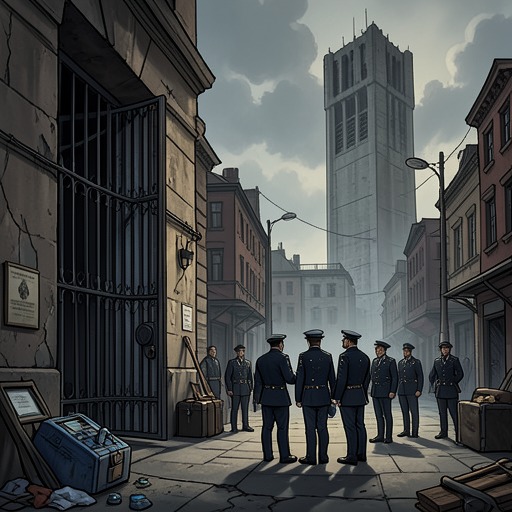
Dr B was arrested by the SS on the evening Chancellor Schuschnigg announced his resignation, one day before Hitler entered Vienna. After hearing Schuschnigg’s farewell speech, he burned the most important papers; just before his door was broken down, he sent indispensable documents concerning assets held abroad to his uncle in a laundry basket carried by his housekeeper. The papers concerned property the monasteries and two archdukes had deposited outside the country.
The Gestapo did not treat Dr B as an ordinary political prisoner. It suspected that he had information about funds kept beyond its reach and wanted material that could implicate monasteries and supporters of the monarchy. Rather than send him to a concentration camp, it held him at the Hotel Metropole, its headquarters, as part of a small group from whom it sought money or information. The apparent privilege of a private hotel room was, in his account, a calculated interrogation method: isolation was intended to make prisoners disclose what force might not.
Isolation and Interrogation
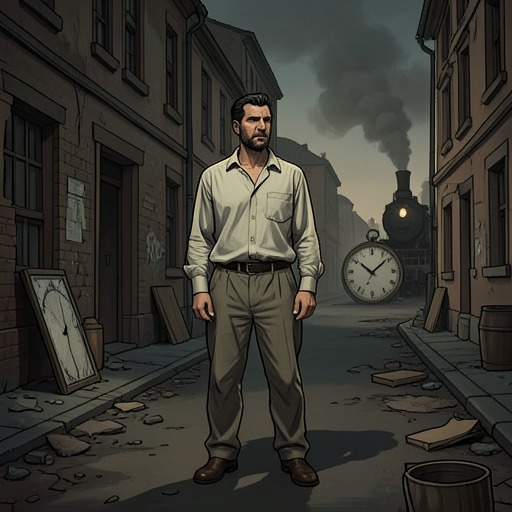
For fourteen days Dr B was kept alone with a bed, table, armchair, washbasin, barred window, and wall. He had no books, newspapers, paper, or writing implements, and could not tell the time. The warder was forbidden to speak or answer questions. The room’s few objects and the repeated view of the same wall came to define a confinement cut off from ordinary contact and the passage of time.
Interrogations began after this period. Dr B was brought before officials and questioned about the office’s transactions, including which bonds he had bought for particular monasteries and which banks he had contacted. He could not know what the Gestapo had already discovered, what the informant had disclosed, or whether the papers sent to his uncle had arrived. That uncertainty made every answer consequential: a disclosure might expose another person, while an excessive denial might condemn Dr B himself. The questioning therefore depended not only on what he knew but on his inability to judge the investigators’ knowledge.
Returning to the room did not end the interrogation’s effects. Dr B repeatedly reconsidered what he had said and tried to anticipate how officials might interpret it, unable to verify what they had recorded. The empty interval turned those reviews into a continuing mental process. His account distinguishes the scheduled questioning from the unending self-questioning that followed it, showing how the isolation imposed by the authorities extended the pressure beyond the interview itself.
Release and Aftermath
Dr B’s release came after a medical examination and the intervention of a doctor who told him he would try to help. He did not learn what the doctor told the authorities, or whether the Gestapo had simply lost interest after Hitler occupied the Sudetenland and considered the Austrian case closed. The outcome was a requirement to leave his homeland within fourteen days. The necessary military, police, tax, passport, visa, and health formalities occupied that interval, leaving little time to reflect on his imprisonment.
For weeks Dr B found that he could not bring himself to recall the cell; he says that only later, aboard the ship, did he first feel able to remember and recount what had happened. The Anschluss thus appears in his story both as a political rupture and as the immediate cause of arrest, interrogation, and forced departure. Its consequences persist beyond release: the account that he eventually gives is itself a return to an experience that had initially been inaccessible to memory.